A common limitation of AI scribes clinicians should watch for...
Feb 06, 2026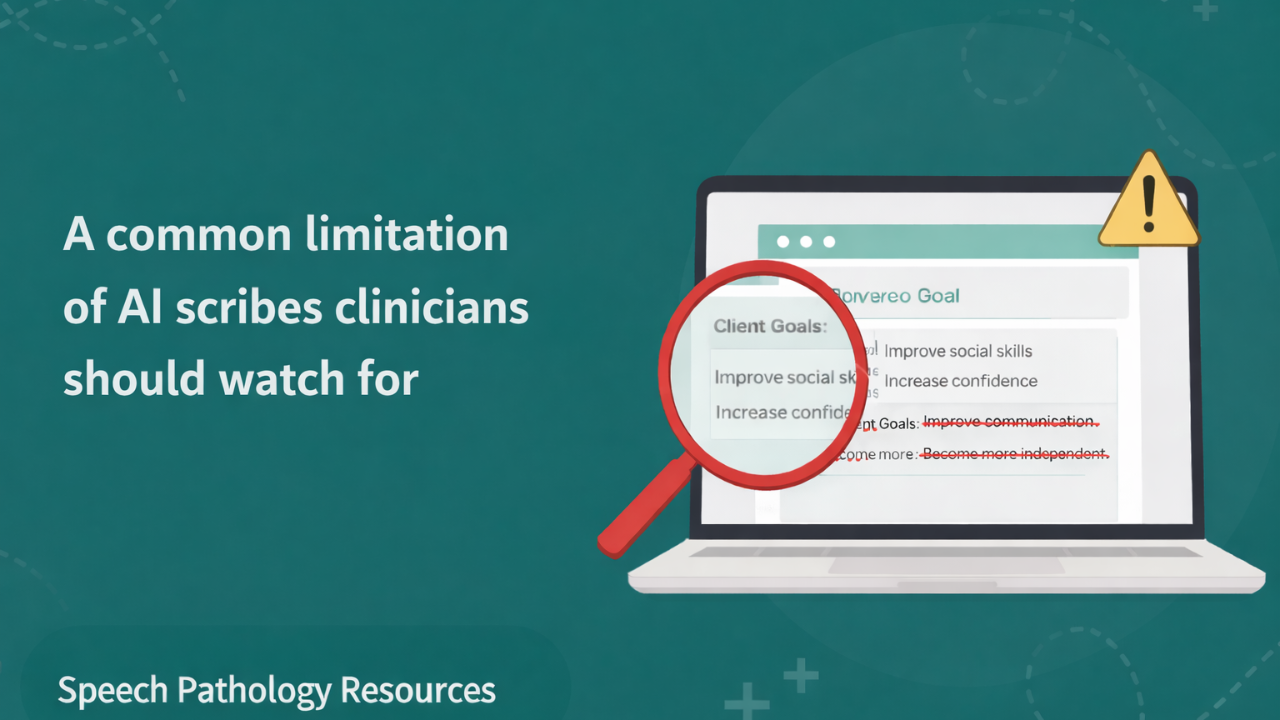
What is a common limitation of AI scribes in clinical practice?
One common limitation of AI scribes is goal inference.
Many tools generate goals based on session language rather than the clinician’s intended goals, NDIS goals, or long-term therapy plan.
This can lead to subtle but important misalignment in clinical notes.
Why do AI scribes infer goals?
AI scribes work by identifying patterns in spoken or written session data. When goals are not clearly stated, the tool attempts to infer them from context. While this can seem helpful, it doesn’t replace clinical reasoning or funding-specific goal setting.
Why does goal drift matter in clinical notes?
Goal drift can create problems when notes no longer accurately reflect:
-
agreed therapy goals
-
NDIS or funding documentation
-
your clinical rationale
Over time, this can affect reporting quality, progress tracking, continuity of care, and confidence in your documentation.
How can clinicians reduce goal drift when using AI scribes?
A simple safeguard is to explicitly anchor goals during each note generation. This might include:
-
pasting a short goals list into the context box
-
stating goals clearly at the end of the session before stopping transcription
-
prompting the scribe to include a dedicated “Goals Addressed” section
These small steps help ensure the final note reflects your intent, not the AI’s assumptions.
Are AI scribes still worth using?
Yes, when used thoughtfully. AI scribes can save significant time and cognitive load, but they work best when paired with clear clinician oversight, especially around goals and clinical decision-making.
Want help choosing an AI scribe that actually fits your practice?
Inside my AI in Practice Course, I walk clinicians through a structured process for evaluating AI scribes, including my AI scribe finder GPT and a reflection worksheet to help you choose tools based on your scope, clients, and workflow, not hype.